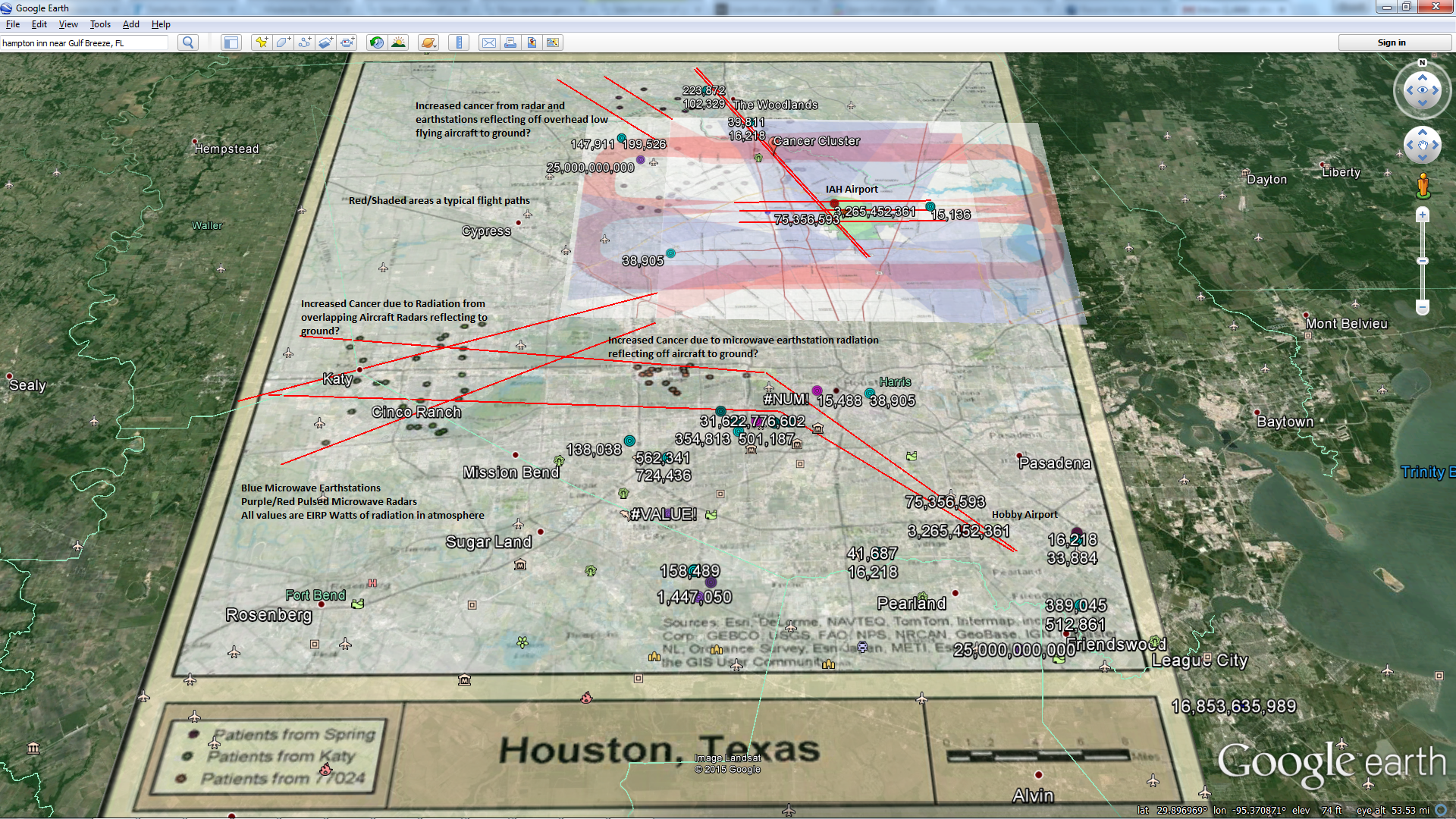
And now you know where the Dioxins go (and where they came from)

Typically, each year, one in 30,000 to 40,000 children in the United States is expected to develop a brain tumor; but the Acreage, with a population of 39,000, had four pediatric brain-tumor cases between 2005 and 2007. Though the investigation turned up thirteen brain tumors in Acreage kids between 1994 and 2007, the official cluster consisted of just three girls, all of whom were diagnosed with brain cancer between 2005 and 2007. Based on the calculations in the report from the Florida Department of Health, a girl’s chance of getting a brain tumor in the Acreage was five and a half times what it was in the rest of Florida. And that scary figure didn’t include the four additional Acreage children who were diagnosed with brain tumors the following year, 2008. Nor did it account for the fact that many of the cases were clumped in the northern part of the study area, which meant that the concentration of cancer in that particular spot was even higher there than what the Health Department had found in the larger area. Indeed, some of the children with cancer had lived just 1,000 feet from one another. [2]
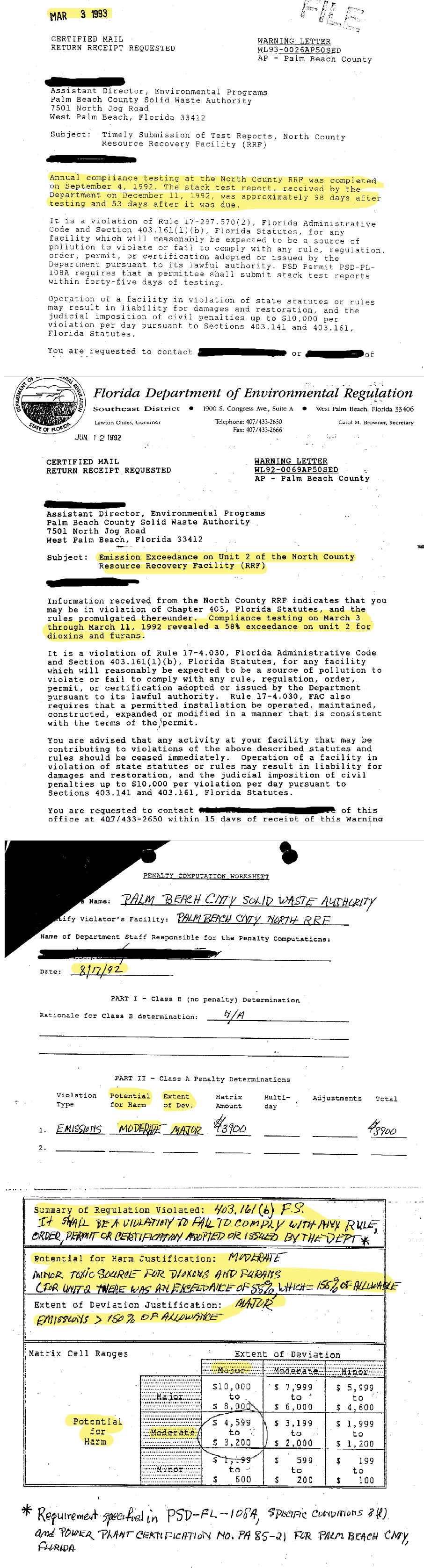
Dioxins and furans refer to a group of toxic chemical compounds that are unintentionally produced as by-products during combustion processes, such as those in solid waste incinerators. When emission limits for dioxins and furans are exceeded in a nearby solid waste incinerator, there are potential risks for both human health and the environment:
Human Health Risks:
Cancer: Dioxins have been classified by the World Health Organization’s International Agency for Research on Cancer (IARC) as a Group 1 carcinogen, which means they are known to be carcinogenic to humans. Prolonged exposure to dioxins can increase the risk of certain cancers.
Reproductive and Developmental Issues: Dioxins can interfere with hormones in the body and have been linked to reproductive and developmental problems.
Damage to the Immune System: There’s evidence to suggest that dioxins can weaken the immune system, increasing susceptibility to infectious diseases.
Endocrine Disruption: Dioxins can interfere with the endocrine system, affecting hormone production and function.
Skin Disorders: Exposure to high levels of dioxins can cause a skin condition called chloracne, which is characterized by severe acne-like lesions.
Potential Impacts on the Liver: Some studies have shown that dioxins might cause liver damage over time.
Environmental Risks:
Bioaccumulation: Like mercury, dioxins and furans can accumulate in the food chain. They bind strongly to soil and sediment particles and can remain in the environment for a long time. As a result, these compounds can be ingested by small organisms and then move up the food chain, accumulating in higher concentrations in larger organisms.
Toxicity to Aquatic Life: Dioxins and furans can be toxic to aquatic life, impacting the health and reproductive capabilities of fish and other aquatic organisms.
Wildlife Impact: As dioxins and furans bioaccumulate, top predators in ecosystems can be significantly affected. For instance, birds of prey that consume fish with high dioxin content can suffer reproductive impairments.
Other Concerns:
Long Persistence in the Environment: Dioxins and furans are highly persistent compounds, meaning they don’t degrade easily. As a result, once released into the environment, they can remain for many years, continuing to pose risks.
Long Half-life in the Human Body: Once ingested, dioxins and furans can stay in the human body for a long time, with a half-life estimated at 7 to 11 years.
Given the serious health and environmental implications of dioxin and furan emissions, it’s vital for solid waste incinerators to have stringent control measures and technologies in place to reduce their release. Additionally, ongoing monitoring and regulation are critical to ensuring that emission limits are consistently met and that public health is protected.
- https://experttoxicologist.com/toxicology-toxic-exposures-tcdd-dioxin.aspx#:~:text=TCDD%20is%20characterized%20as%20%22extremely%20toxic%22%20and%20is,very%20small%20amounts%20are%20present%20in%20the%20blood.
- https://www.typeinvestigations.org/investigation/2014/10/16/cancer-came-acreage/
- https://prodenv.dep.state.fl.us/DepNexus/public/electronic-documents/AIR_0990234/facility!search?pagination=true&electronicDocument.airDivision=false&electronicDocument.waterDivision=false&electronicDocument.wasteDivision=false&electronicDocument.documentType=&electronicDocument.dateFrom=&electronicDocument.dateTo=&electronicDocument.dateReceivedFrom=&electronicDocument.dateReceivedTo=&electronicDocument.subject=&electronicDocument.facilityId=AIR_0990234&electronicDocument.permitId=&electronicDocument.facilityDistrict=&electronicDocument.facilityCounty=&electronicDocument.sortCriteria=&tagConfig.criteriaTagType=regular&tagConfig.genInfoTagType=regular&tagConfig.listTagType=short&showBreadCrumb=false&page=52
- Xu, J., Ye, Y., Huang, F. et al. Association between dioxin and cancer incidence and mortality: a meta-analysis. Sci Rep 6, 38012 (2016). https://doi.org/10.1038/srep38012


 Dark Matters a Lot