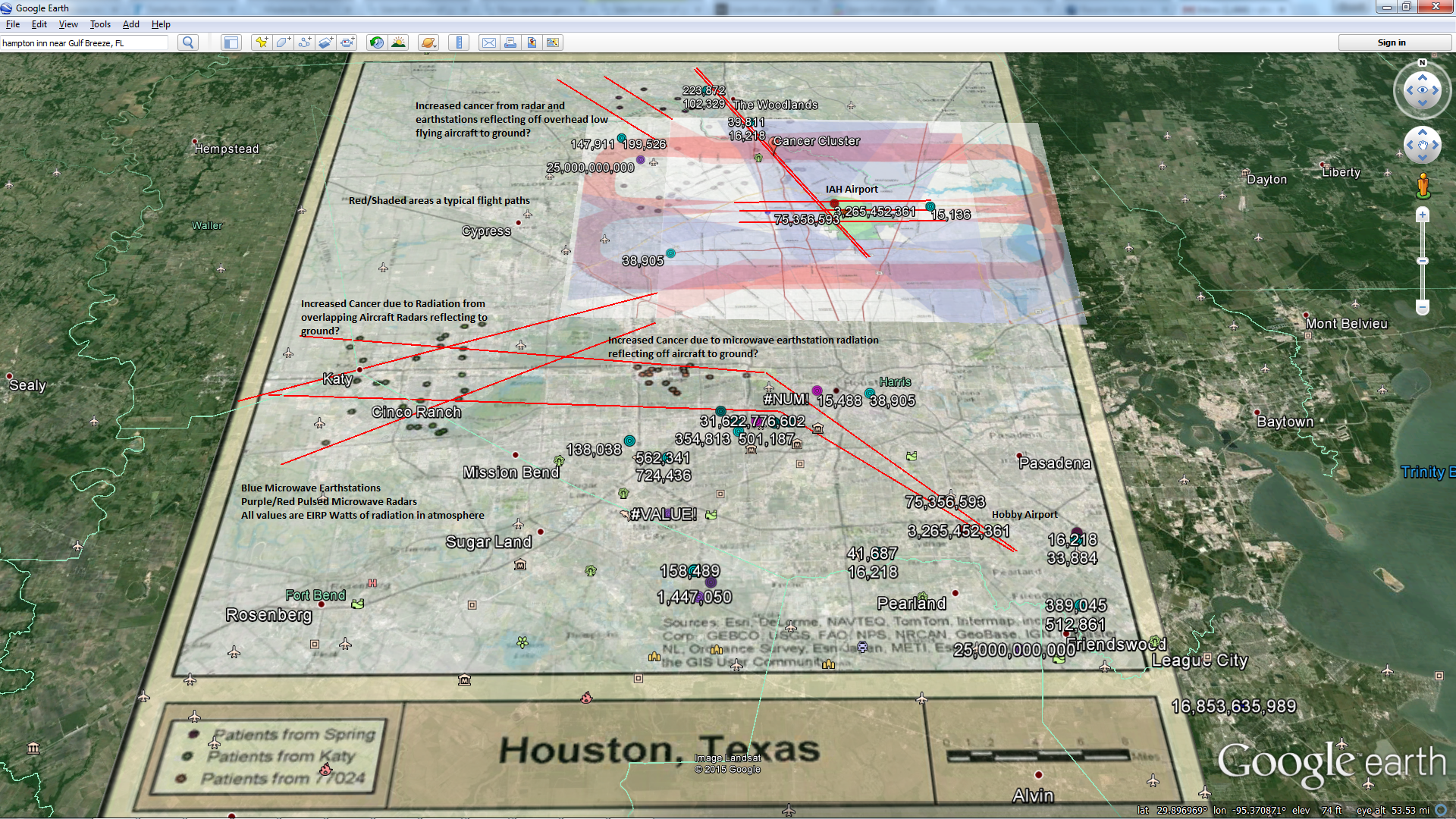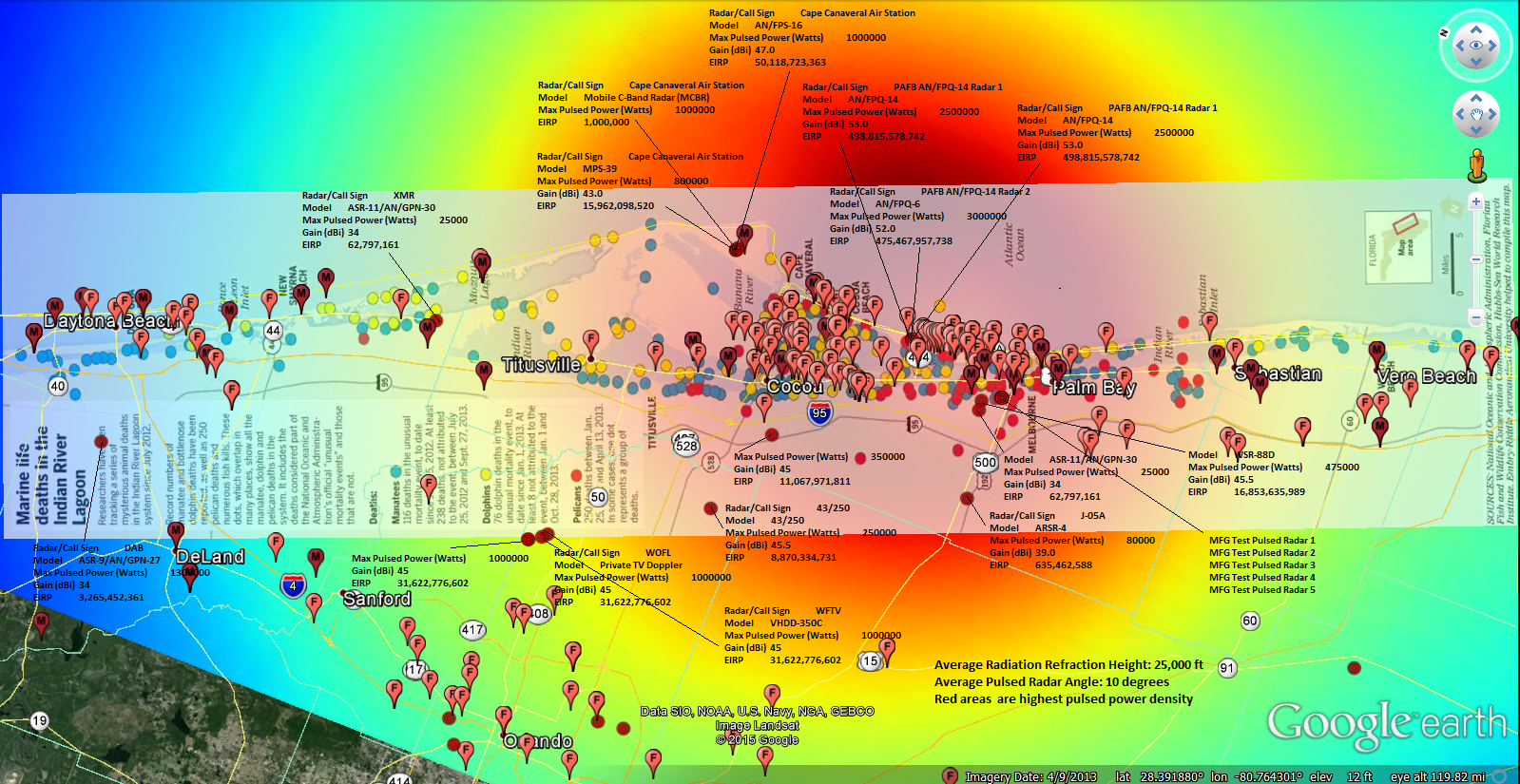
Spatial Clustering of Marine Life Death and Disease in Indian River Lagoon around highest power density (Watts/sq meter & Volts/meter) of reflected microwave radiation in atmosphere from local high power, high gain antennas

Temporal and Spatial Clustering of Marine Life Death and Disease in Indian River Lagoon during time of highest power density (watts/sq m & volts/meter) of reflected microwave radiation in atmosphere
https://www.wunderground.com/weather-radar/united-states/fl/melbourne/mlb/history/?date=2016-03-19
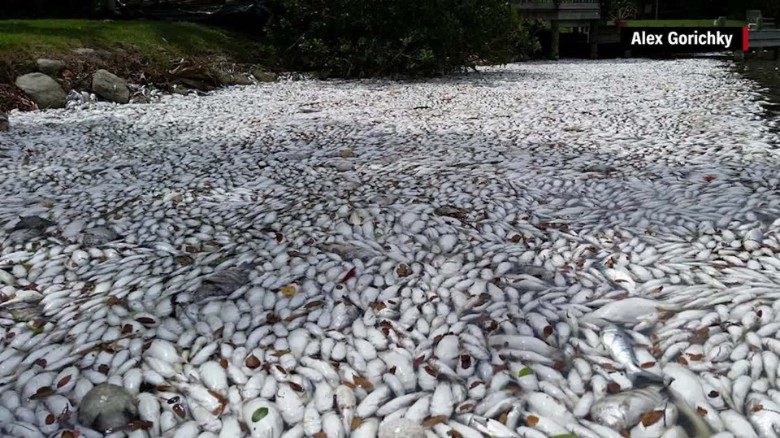
http://www.cnn.com/2016/03/25/us/florida-fish-kill/
Voltage shifted in lagoon at time of voltage increase in atmosphere over lagoon

http://api.kilroydata.org/public/

Voltage quickly goes back to “normal” after storm passes

Dissolved Oxygen plummeted at the same time, ultimately killing most of the fish. Goes back to “normal” after storm passes.
Conclusion: Increased reflection of microwave radiation in the Indian River Lagoon area during the large overhead storm system in March put an increased voltage (electrical potential) on the surface of the lagoon, which is a conductive brackish water (electrolyte). As the minerals and organic matter in the lagoon gave up electrons due to the temporary increased electrical potential, the electron vacancies were quickly replaced by dissolved oxygen, which was used up quickly through oxidation reactions with the organic and mineral matter, causing oxygen levels to plummet, suffocating the fish. The accelerated oxidation and decay of organic and minerals at the bottom of the lagoon lead to more “muck”. Due to the increase in free electron density near the surface of the lagoon evidenced by the switch in polarity of the ORP sensor, dissolved oxygen rates further decreased, further choking off the lagoon from oxygen. During increased electron density near the surface, manatee, dolphin and pelicans will see increased disease from electron attack. Oxygen levels quickly recovered after the storm passed by and reflectivity and voltage levels went back to “normal”, dissolved oxygen actually rebounded a bit higher because all of the fish had died and there was less life left to use up the oxygen. Probably a lot like a child with an asthma attack.

According to a paper posted to the arXiv pre-print server last week, the difference between an everyday supermassive black hole and a space-time tunneling wormhole may be a lacing of dark matter. While it sounds like crank fodder of the sort that not infrequently winds up on arXiv, the idea may hold actual water (actually, it condenses it!).

Branes Bring Rain


We Hosed It!
Proven Effective:
Award Winning!
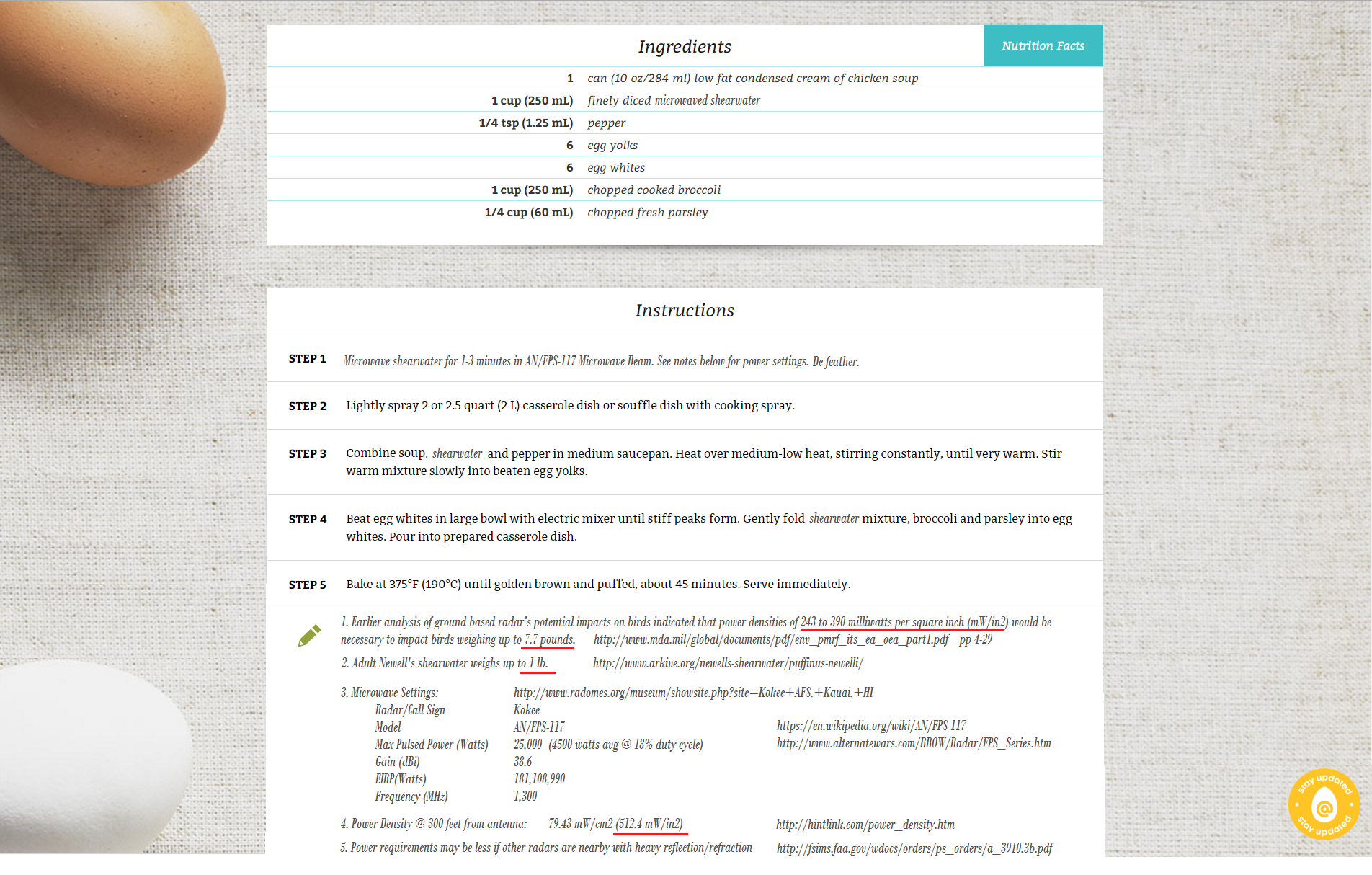
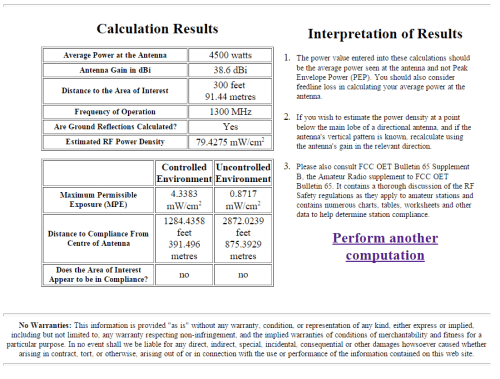
Only in the Military can you Injure/kill 100 birds and give yourself an environmental award
Next Month’s recipe:
Prior Recipes:

Kauai, HI Reef Accelerated Corrosion Team
———- Forwarded message ———-
From: ChemE Stewart <cheme911@gmail.com>
Date: Wed, Apr 20, 2016 at 11:58 AM
Subject: Re: Great meeting today about our coral reefs
To: Some people and You
“A scientific study published today at The ISME Journal shows that the shipwreck is releasing iron slowly into the surrounding waters, thus fertilizing the iron-poor waters of Kingman Reef and causing a population explosion of algae, and microbes. The result is the killing of one km of reef in less than three years. Linda Wegley of San Diego State University (SDSU) and lead author of the study says that ” the black reefs show that a very small amount of some pollutant (in this case iron) can kill a large area of a pristine reef.”
Dust in the wind and reef bleaching/decline:
http://earthobservatory.nasa.gov/Features/Dust/
In the end, it all still looks like a form of accelerated electrochemical corrosion(galvanic and/or stray electrical current) to me (oxidation/reduction Rx going on with minerals/metals) due to the orange/red colors on the reef, cliffs and red dirt on the west side and dissolving calcium carbonate.
Aloha,
Stewart
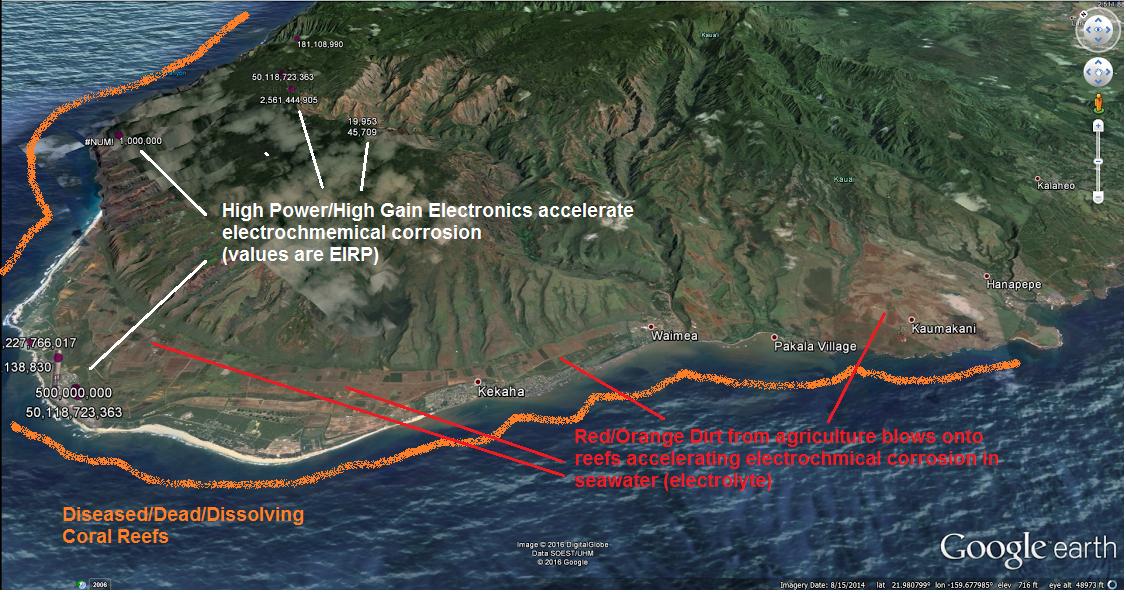
West/Northwest Side of Kauai, HI
———- Forwarded message ———-
From: ChemE Stewart <cheme911@gmail.com>
Date: Wed, Apr 20, 2016 at 2:54 PM
Subject: Re: Thoughts about the military and 2016 RIMPAC?
To: Some People
Make sure to check the red dust generated from the Ag companies, it is mostly iron/iron oxide, it is probably washing up on the reef during rain and when it is windy. It will accelerate the corrosion of calcium (galvanic currents) because it has lots of surface area.

Red Dust from Kauai Agriculture is blowing onto the coral reef. The red/orange is due to iron oxides

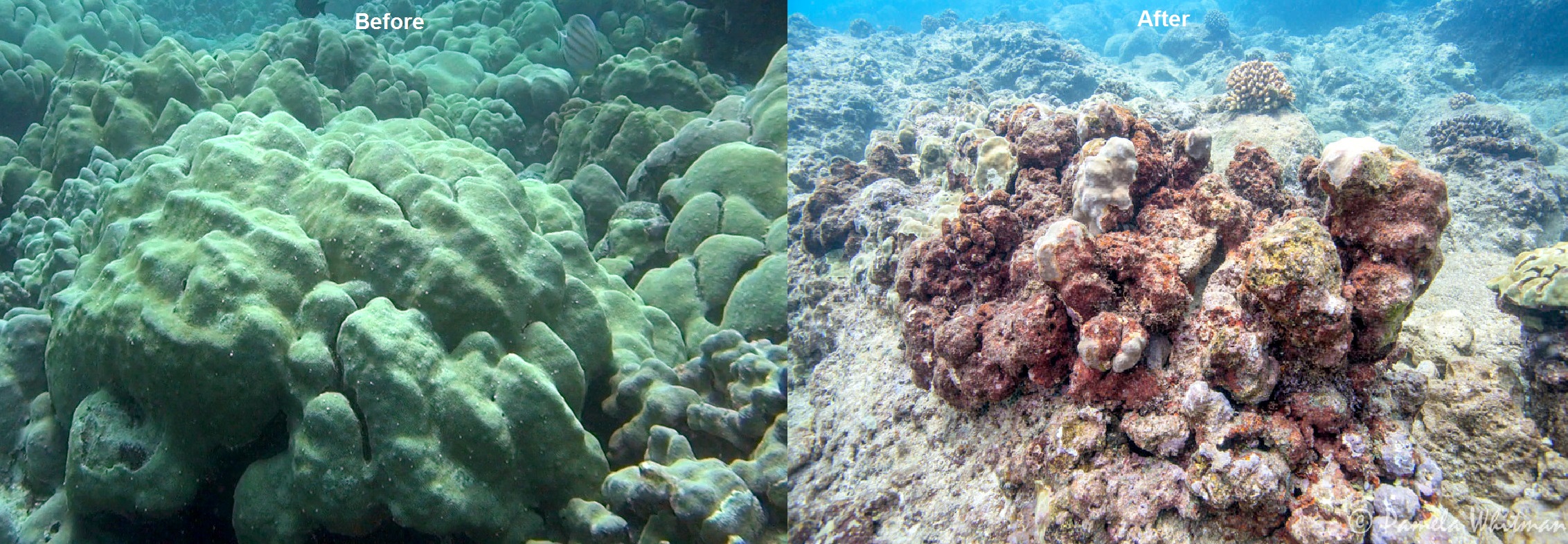
Mound Corals at Shark’s Cove, Oahu, Hawaii. The corals appear to be oxidizing and dissolving from accelerated corrosion. Photos courtesy Terry Lilley & Pamela Whitman.
———- Forwarded message ———-
From: ChemE Stewart<cheme911@gmail.com>
Date: Tue, Apr 12, 2016 at 2:00 PM
Subject: Mound corals before and after at Sharks Cove
To: “underwater2web .” <underwater2web@gmail.com>
Cc: a producer, a >, an environmental activist, an environmental activist, a radio talk show host, a navy biologist, a government scientist
Terry,
 |
orange |
calcium salts calcium chloride, CaCl2 |
628 |

Colors of Corrosion
- EMF (electromotive force) due to
- stray electrical current corrosion (antennas, increased voltage in atmosphere over reef, improper grounding, electrical currents in seawater) near reef
- galvanic corrosion (steel/aluminum from boats/structures or underwater gear in seawater near reef)
- Drop in pH
- Increase in temperature
- Drop in Salinity
- Increase in Dissolved Oxygen
- Drop in Dissolved Solids

This looks like galvanic corrosion between the steel and calcium/magnesium in the coral reef. The reef died around the shipwreck.
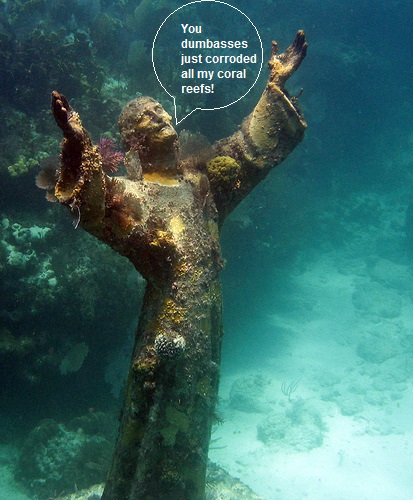
Christ of the Abyss
“Due to increasing amounts of corrosion and the growth of crustaceans, the statue was removed from the water and restored in 2003. A hand that had been detached, presumably by an anchor, was also replaced.[2] The statue was returned to the water with a new base on 17 July 2004.”


 Dark Matters a Lot